Fiberglass vs Acrylic: Which Outdoor Hot Tub Should You Choose?
When choosing a premium outdoor hot tub, customers most often face a choice between two materials: acrylic and fiberglass. Both options look aesthetically pleasing, have a beautiful glossy finish, and feel smooth to the touch.
However, outdoor use is fundamentally different from using a bathtub inside a warm bathroom. Temperature fluctuations from -30°C to +40°C, ice, UV exposure, tons of water, and dynamic loads from bathers all place special demands on the material.
Our Baltresto hot tubs are manufactured from multilayer composite fiberglass using premium BÜFA® Marine NPG yacht-grade gelcoat. Let’s take a closer look at how this material differs from popular acrylic and which option is better suited for outdoor conditions.
1. Construction and Strength: Plastic vs Composite
The key difference between these materials lies in their physical structure. Why are wind turbine blades, high-speed train bodies, aircraft, and marine yachts made from fiberglass rather than acrylic?
Acrylic (PMMA)
Acrylic is a homogeneous thermoplastic material. It has no internal reinforcing framework. On its own, an acrylic shell does not possess sufficient structural strength and can crack under the weight of water. That is why manufacturers are forced to artificially reinforce the backside with a layer of inexpensive polyurethane or fiberglass. In other words, acrylic is essentially just a beautiful 3 mm decorative surface layer.
Baltresto Fiberglass
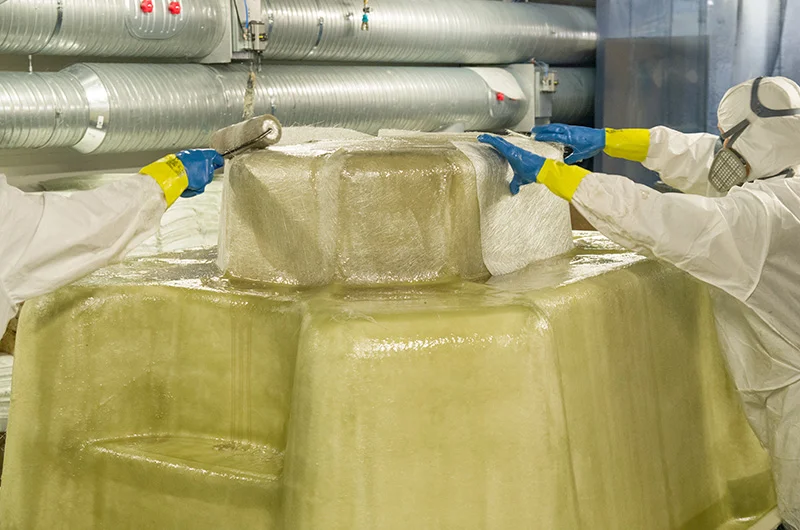
Fiberglass is a composite material that works similarly to reinforced concrete. A matrix of strong glass fibers (the reinforcement) is securely bonded with polyester resin (the binder).
This structure provides exceptional tensile, bending, and torsional strength while remaining relatively lightweight. A fiberglass shell is a single, monolithic, ultra-strong self-supporting construction.
(On the photo: Baltresto workers lay up glass fiber sheets and impregnate them with polyester resin.)
2. Outdoor Performance: Frost and Temperature Fluctuations
Outdoor conditions are the toughest test for any hot tub.
Acrylic
Like any plastic material, acrylic has a high coefficient of thermal expansion. In summer sunlight it expands, while in freezing winter temperatures it contracts and becomes brittle. The main issue lies in the “layered sandwich” construction of acrylic tubs: the acrylic itself and its reinforcing backing expand and contract at different rates. During sudden temperature changes – for example, filling a frozen tub with hot water – enormous stress develops between the layers, which over time can lead to delamination or microcracks.
BÜFA® Marine Fiberglass
Fiberglass has a minimal expansion coefficient. Marine-series gelcoat was specifically developed for boats and yachts that overwinter in icy conditions. The structure does not warp or deform, even at -40°C or under constant exposure to very hot water.
3. Impact Resistance and Repairability
Fiberglass (10/10 for Repairability)
Composite fiberglass is highly elastic. In the event of a strong accidental impact – for example, dropping a log while heating the stove – fiberglass absorbs the shock. In the worst-case scenario, only a small chip in the surface coating may occur, while the shell itself remains watertight.
The biggest advantage is that fiberglass can be restored perfectly. Any scratch or chip can be repaired, covered with original-color gelcoat, and polished back to a factory finish. No visible traces of repair remain at all. (This is exactly how yacht hulls have been restored for decades.)
Acrylic (3/10 for Repairability)
In cold conditions, acrylic loses its flexibility. A strong point impact can cause a deep through-crack. Repairing such damage invisibly is nearly impossible. Cracks are usually glued or patched, but the appearance of the tub is permanently compromised, and the structural integrity in that area can never be fully restored.
4. Chemical Resistance (Salt, Chlorine, and Osmosis)
Both materials belong to the premium segment and offer excellent resistance to aggressive chemicals, though there are some important differences.
Salt Resistance
Result: Tie (10/10)
Acrylic is completely inert to salt. BÜFA® Marine NPG gelcoat was originally developed for salty ocean water. Both types of hot tubs can safely be used with sea salt.
Chlorine Resistance
Acrylic has a slight advantage in terms of user tolerance. It can better withstand direct contact with chlorine tablets and accidental overdosing.
Marine gelcoat performs excellently under normal chlorine levels (up to 3 ppm), but it does not tolerate direct contact with undissolved chemicals on the surface, which may cause a light discoloration spot – essentially a chemical burn.
Protection Against Osmosis (Blistering)
Hot water combined with chemicals naturally attempts to penetrate microscopic pores in the surface.
Acrylic is a solid monolithic material, so the risk of osmosis is virtually zero.
In fiberglass construction, Baltresto uses NPG-based gelcoat specifically to protect against osmosis. This is considered the gold standard of water resistance in the marine industry and reduces the likelihood of osmosis to nearly zero when basic maintenance rules are followed.
Final Verdict: Which One Should You Choose?
Acrylic is an excellent material for indoor bathtubs and jacuzzi systems where room temperature remains stable. It tolerates mistakes in chemical dosing well and offers an outstanding glossy appearance.
However, when it comes to harsh outdoor conditions, heavy physical loads, and extreme temperature fluctuations, composite fiberglass with BÜFA® Marine NPG gelcoat is the clear winner.
By choosing a Baltresto hot tub, you are not simply buying a beautiful shell – you are investing in a reliable yacht-grade engineering structure designed for decades of trouble-free outdoor operation. It withstands harsh northern winters and, even in the event of accidental damage, can be restored both visually and structurally to its original condition.